
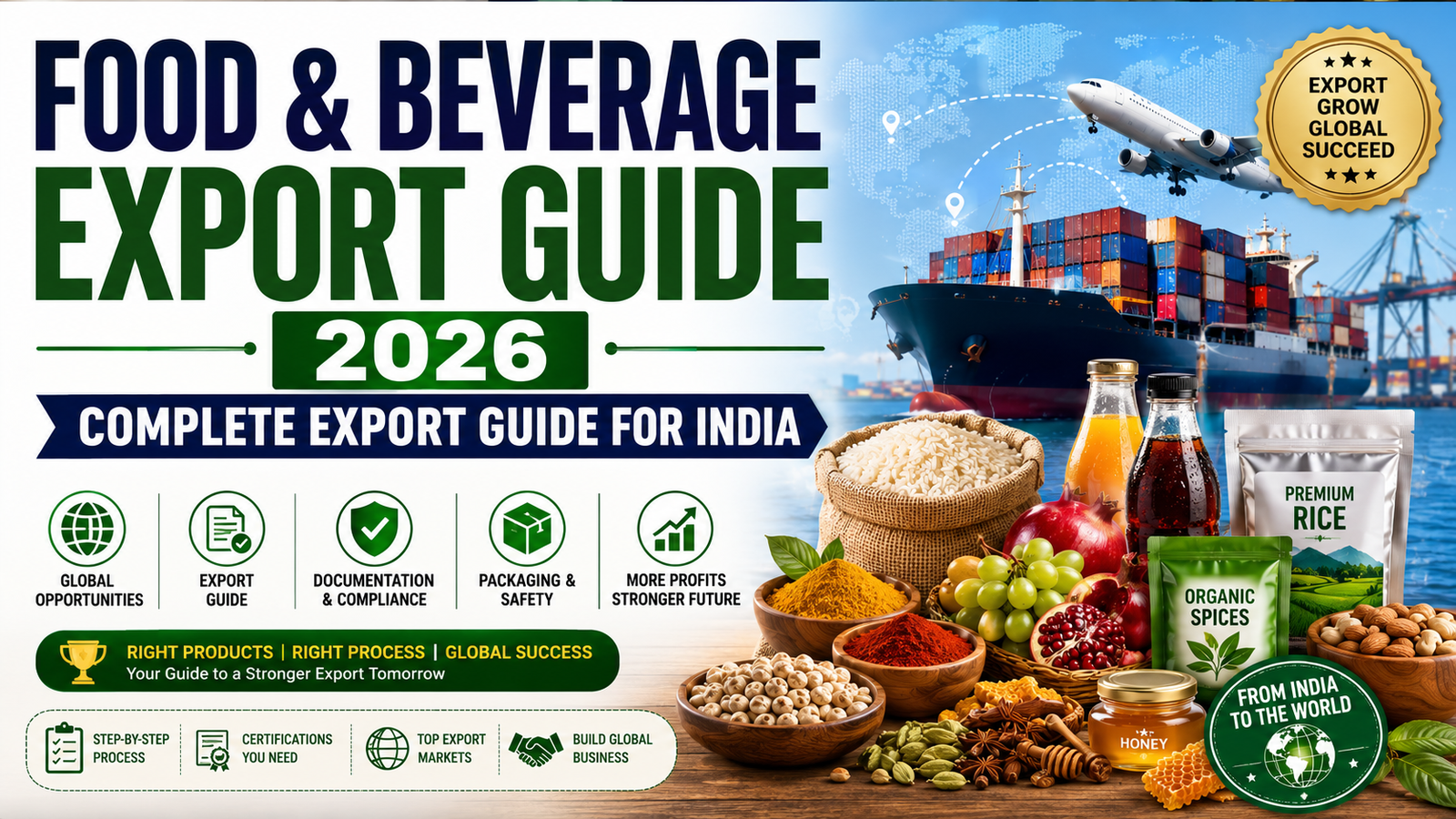
Food & Beverage Export Guide 2026
India is one of the world's leading exporters of food and beverage products, supplying high-quality agricultural commodities, processed foods, beverages, spices, dairy products, cereals, and organic products to countries across Asia, Europe, North America, the Middle East, and Africa. Growing international demand, government support, and improved logistics have created excellent opportunities for Indian exporters.
Whether you are a manufacturer, supplier, trader, exporter, or international buyer, understanding the food and beverage export process is essential for successful global trade. This guide explains every stage of exporting food and beverage products from India.
Why Export Food & Beverage Products from India?
India has a strong agricultural base and is recognized worldwide for its diverse food products and competitive pricing.
Benefits of Food & Beverage Export
- Growing Global Demand
- Competitive Manufacturing Costs
- Government Export Support
- Wide Product Variety
- Strong Agricultural Supply Chain
- High Profit Potential
- Access to International Markets
- Expanding Organic Food Industry
Popular Food & Beverage Products Exported from India
| Category | Products |
|---|---|
| Cereals | Rice, Wheat, Maize, Millets |
| Pulses | Chickpeas, Lentils, Green Gram |
| Spices | Turmeric, Cumin, Coriander, Black Pepper, Cardamom |
| Fruits | Mango, Grapes, Banana, Pomegranate |
| Vegetables | Onion, Potato, Garlic, Ginger |
| Tea & Coffee | Black Tea, Green Tea, Coffee Beans |
| Dairy Products | Milk Powder, Ghee, Butter |
| Edible Oils | Sesame Oil, Mustard Oil, Groundnut Oil |
| Processed Foods | Pickles, Snacks, Ready-to-Eat Foods |
| Beverages | Fruit Juice, Herbal Drinks, Soft Drinks |
Step-by-Step Food & Beverage Export Process
Step 1: Select Export Products
Choose products based on:
- International Demand
- Shelf Life
- Product Quality
- Market Trends
- Profit Margin
- Import Regulations
Step 2: Register Your Export Business
Complete the necessary registrations:
- Business Registration
- PAN Card
- GST Registration
- Current Bank Account
- Import Export Code (IEC)
Step 3: Obtain Required Certifications
Depending on your product category, you may require:
| Certification | Purpose |
|---|---|
| FSSAI License | Food Safety Compliance |
| APEDA Registration | Agricultural Export |
| Certificate of Origin | Country Verification |
| Phytosanitary Certificate | Plant Health |
| Health Certificate | Food Quality Assurance |
| Organic Certification | Organic Products |
Step 4: Prepare Export Documentation
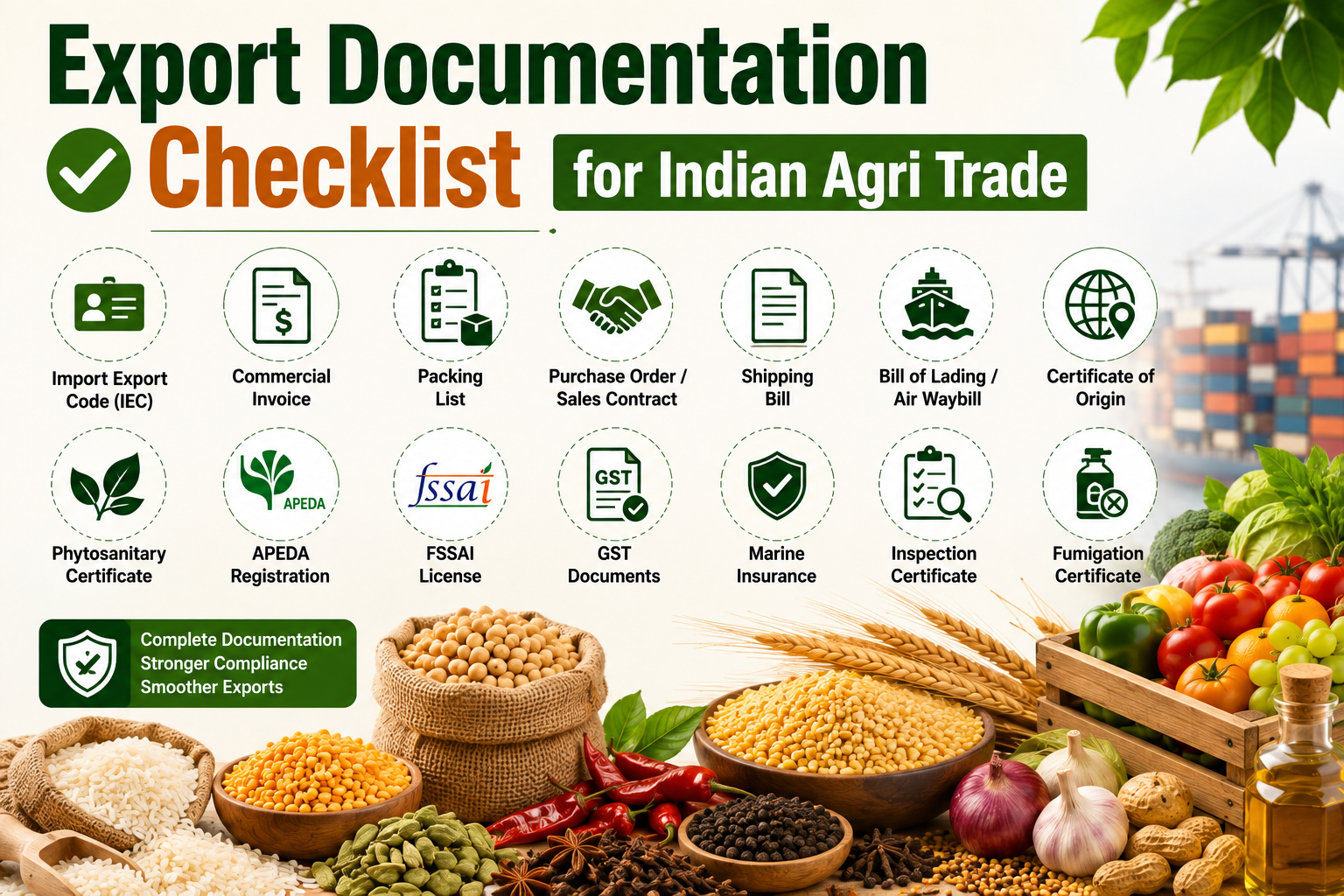
Essential documents include:
| Document | Required |
|---|---|
| Commercial Invoice | ✔ |
| Packing List | ✔ |
| Shipping Bill | ✔ |
| Bill of Lading / Air Waybill | ✔ |
| Certificate of Origin | ✔ |
| GST Invoice | ✔ |
| Insurance Certificate | Recommended |
| Inspection Certificate | Buyer Requirement |
Step 5: Follow Food Safety Standards
Ensure products meet international food safety requirements.
Important quality factors include:
- Hygiene
- Moisture Control
- Proper Storage
- Food Grade Packaging
- Quality Inspection
- Traceability
- Batch Identification
Packaging Requirements
Good packaging protects products and improves buyer confidence.
Packaging should include:
- Product Name
- Ingredients
- Net Weight
- Country of Origin
- Manufacturing Date
- Expiry Date
- Batch Number
- Storage Instructions
- Nutritional Information
- Barcode
International Food Export Standards
Many countries require compliance with international food safety standards.
Common standards include:
- HACCP
- ISO 22000
- FSSAI
- GMP (Good Manufacturing Practices)
- Organic Certifications
- Country-Specific Import Regulations
Top Export Markets
Indian food and beverage products are exported worldwide.
Major export destinations include:
| Country | Popular Products |
|---|---|
| United States | Spices, Rice, Organic Foods |
| United Arab Emirates | Rice, Pulses, Snacks |
| Saudi Arabia | Rice, Tea, Spices |
| United Kingdom | Ready-to-Eat Foods, Tea |
| Canada | Organic Foods, Pulses |
| Australia | Rice, Spices |
| Germany | Organic Products |
| Singapore | Processed Foods |
Logistics & Shipping
Choose the right shipping method based on product type.
Sea Freight
Suitable for:
- Rice
- Wheat
- Pulses
- Spices
- Bulk Commodities
Air Freight
Suitable for:
- Fresh Fruits
- Vegetables
- Dairy Products
- Perishable Foods
Common Challenges
| Challenge | Solution |
|---|---|
| Documentation Errors | Maintain Complete Records |
| Customs Delays | Accurate Documentation |
| Product Damage | Export Quality Packaging |
| Food Safety Compliance | Follow International Standards |
| Payment Risks | Secure Payment Methods |
| Logistics Issues | Trusted Freight Partners |
Tips for Successful Food & Beverage Export
- Maintain consistent product quality
- Use export-grade packaging
- Keep documentation updated
- Obtain required certifications
- Build long-term buyer relationships
- Research target markets
- Follow food safety standards
- Participate in international trade fairs
- Invest in digital marketing
- Monitor changing import regulations
Frequently Asked Questions
Which food products are most exported from India?
Rice, spices, tea, coffee, pulses, fruits, vegetables, dairy products, snacks, and processed foods are among the most exported products.
Is APEDA registration mandatory?
APEDA registration is required for many agricultural and processed food products covered under its regulations.
What certifications are required?
Depending on the product, exporters may need FSSAI, APEDA, HACCP, ISO 22000, Certificate of Origin, and Phytosanitary Certificates.
Which shipping method is best?
Sea freight is ideal for bulk shipments, while air freight is suitable for perishable and high-value food products.
How can I find international buyers?
International buyers can be reached through B2B marketplaces, trade fairs, export promotion councils, distributor networks, and digital marketing.
Conclusion
The global demand for Indian food and beverage products continues to grow, creating significant opportunities for exporters, manufacturers, suppliers, and traders. By selecting the right products, obtaining the necessary certifications, maintaining high food safety standards, preparing accurate export documentation, and using reliable logistics partners, businesses can successfully expand into international markets. Following this Food & Beverage Export Guide 2026 will help exporters build a compliant, profitable, and sustainable global export business.

 Code Identification.png)