
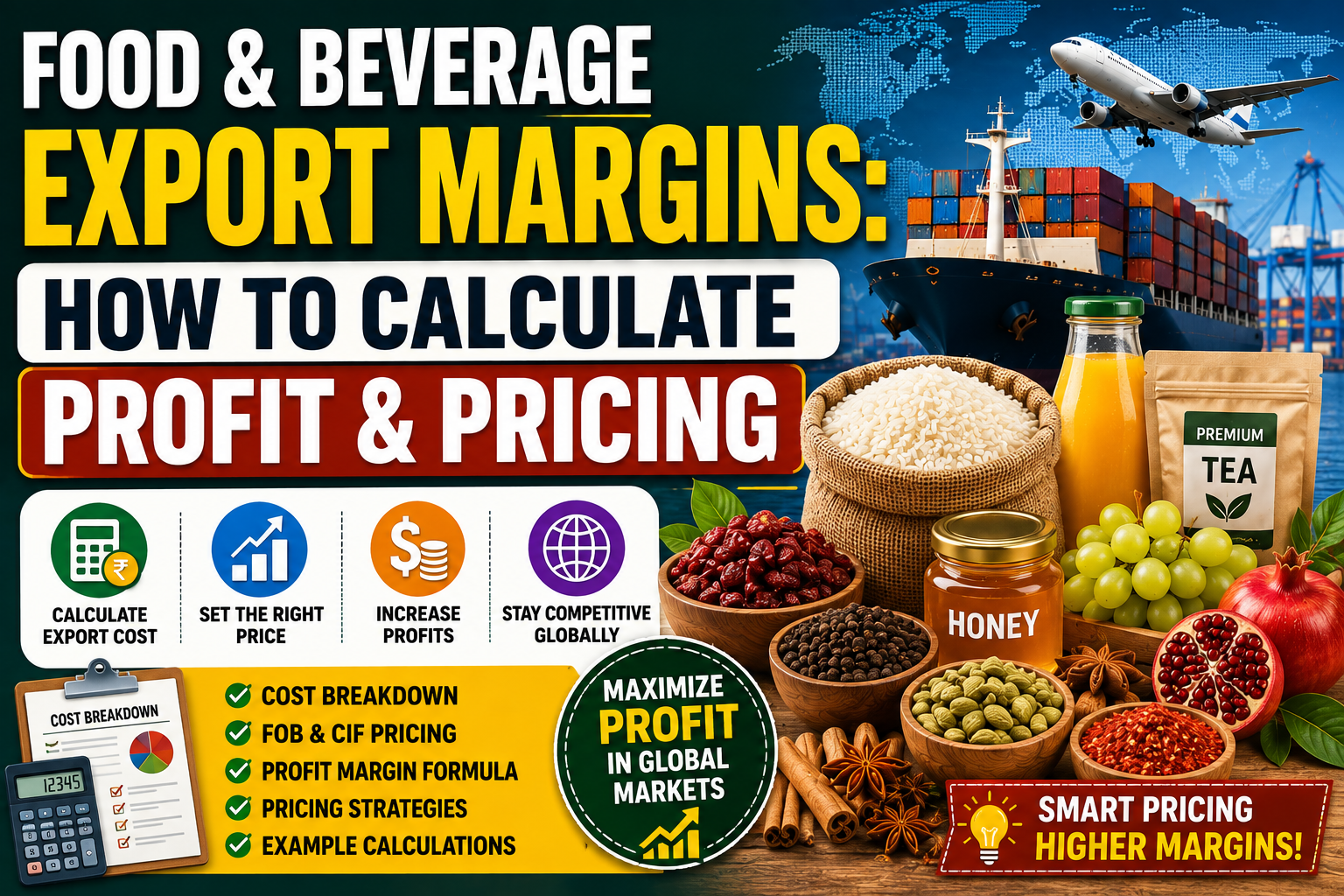
Food & Beverage Export Margins: How to Calculate Profit & Pricing
Pricing is one of the most critical factors in the food and beverage export business. Setting the right export price helps businesses remain competitive while ensuring sustainable profit margins. Whether you export rice, spices, tea, coffee, processed foods, beverages, dairy products, or organic products, understanding export pricing is essential for long-term success.
This guide explains how to calculate export costs, determine selling prices, and maximize profit margins while remaining competitive in global markets.
Why Export Pricing Matters
Incorrect pricing can lead to reduced profits, lost buyers, or unsuccessful export deals. A well-planned pricing strategy helps exporters cover all expenses while maintaining healthy margins.
Benefits of Proper Export Pricing
- Higher Profit Margins
- Better Buyer Confidence
- Competitive Global Pricing
- Improved Cash Flow
- Sustainable Business Growth
- Lower Financial Risks
- Accurate Cost Recovery
- Long-Term Customer Relationships
Key Components of Export Pricing
Before deciding the selling price, every exporter should calculate all associated costs.
Major Cost Components
| Cost Component | Description |
|---|---|
| Product Cost | Manufacturing or Procurement Cost |
| Packaging Cost | Export Quality Packaging |
| Labeling Cost | Product Labels & Compliance |
| Transportation | Inland Freight to Port |
| Loading Charges | Container Loading & Handling |
| Customs Clearance | Export Documentation & Clearance |
| Freight Charges | Sea or Air Freight |
| Marine Insurance | Shipment Protection |
| Banking Charges | International Payment Fees |
| Export Duties | Applicable Government Charges |
| Marketing Cost | Promotion & Buyer Acquisition |
| Miscellaneous Expenses | Unexpected Costs |
Step 1: Calculate Product Cost
The first step is determining the actual production or procurement cost.
Include:
- Raw Materials
- Labor
- Processing
- Quality Inspection
- Packaging Materials
- Storage
- Utilities
Step 2: Add Export Expenses
Apart from manufacturing costs, exporters should include export-related expenses.
Common Export Costs
- Inland Transportation
- Customs Documentation
- Port Handling Charges
- Freight Forwarding
- Export Inspection
- Warehousing
- Insurance
- Container Charges
Step 3: Calculate Total Export Cost
Formula
Total Export Cost = Product Cost + Export Expenses + Logistics Cost + Administrative Cost
Example
| Expense | Cost (USD) |
|---|---|
| Product Cost | $1,000 |
| Packaging | $100 |
| Transportation | $80 |
| Customs Clearance | $50 |
| Freight | $250 |
| Insurance | $20 |
| Documentation | $25 |
| Miscellaneous | $25 |
| Total Export Cost | $1,550 |
Step 4: Decide Your Profit Margin
Profit margins vary depending on the product category, market demand, and competition.
Typical Export Profit Margins
| Product Category | Average Margin |
|---|---|
| Rice | 10–20% |
| Spices | 20–40% |
| Tea & Coffee | 15–30% |
| Fruits & Vegetables | 10–25% |
| Processed Foods | 20–45% |
| Organic Products | 25–50% |
| Beverages | 20–35% |
| Dairy Products | 15–30% |
Step 5: Calculate Export Selling Price
Formula
Selling Price = Total Export Cost + Desired Profit
Example
| Description | Value |
|---|---|
| Total Export Cost | $1,550 |
| Desired Profit (25%) | $388 |
| Final Selling Price | $1,938 |
Understanding FOB and CIF Pricing
International buyers commonly request FOB or CIF prices.
FOB (Free on Board)
FOB includes all costs until the goods are loaded onto the shipping vessel.
FOB Includes
- Product Cost
- Packaging
- Inland Transport
- Export Documentation
- Port Charges
Buyer pays for:
- Ocean Freight
- Insurance
- Destination Charges
CIF (Cost, Insurance & Freight)
CIF includes:
- Product Cost
- Packaging
- Inland Transport
- Freight Charges
- Marine Insurance
The exporter is responsible for arranging freight and insurance to the destination port.
Factors That Affect Export Profit Margins
Several factors influence overall profitability.
Major Factors
- Global Market Demand
- Currency Exchange Rates
- Freight Charges
- Raw Material Costs
- Government Policies
- Product Quality
- Competition
- Seasonal Demand
- Import Duties
- Shipping Delays
Common Pricing Mistakes
Avoid these mistakes when pricing export products.
| Mistake | Impact |
|---|---|
| Ignoring Freight Costs | Lower Profit |
| Incorrect Currency Conversion | Pricing Loss |
| Underestimating Logistics | Reduced Margin |
| Ignoring Insurance | Financial Risk |
| No Competitor Analysis | Lost Sales |
| Poor Cost Tracking | Pricing Errors |
Tips to Improve Export Profit Margins
- Buy raw materials in bulk
- Reduce packaging waste
- Optimize shipping routes
- Negotiate better freight rates
- Use efficient warehouse management
- Increase order quantities
- Build long-term buyer relationships
- Monitor exchange rates
- Improve operational efficiency
- Invest in premium product quality
Simple Export Pricing Formula
| Formula | Purpose |
|---|---|
| Product Cost + Export Cost = Total Cost | Calculate Total Cost |
| Total Cost + Profit = Selling Price | Final Export Price |
| Selling Price − Total Cost = Profit | Profit Calculation |
| Profit ÷ Selling Price × 100 | Profit Margin (%) |
Frequently Asked Questions
What is a good export profit margin?
Profit margins vary by product. Many food and beverage exporters target 10–40%, while premium or organic products may achieve 25–50% depending on the market.
What is the difference between FOB and CIF pricing?
FOB covers costs up to loading goods on the vessel. CIF includes ocean freight and marine insurance to the destination port.
Should freight costs be included in export pricing?
Yes. Freight charges significantly impact total export costs and should be factored into pricing, especially when offering CIF terms.
How can exporters increase profit margins?
By reducing production costs, improving operational efficiency, negotiating better shipping rates, minimizing wastage, and targeting high-value markets.
Which pricing strategy works best?
A cost-plus pricing strategy combined with competitor analysis and market demand evaluation is commonly used for food and beverage exports.
Conclusion
Calculating accurate food and beverage export margins is essential for building a profitable and sustainable export business. By understanding production costs, logistics expenses, freight charges, documentation fees, and market pricing, exporters can set competitive prices while protecting their profit margins. Whether selling under FOB or CIF terms, a well-planned pricing strategy helps improve buyer confidence, strengthen long-term business relationships, and drive consistent growth in global food and beverage markets.


 Code Identification.png)